What Is a Garagiste Winery? Inside a 350-Case Paso Robles Winery
People hear “garagiste” and picture someone making wine next to the lawnmower. Sometimes that’s close to the truth. Mostly it’s a word for a certain kind of winery: tiny, hands-on, and run by the person whose name is on the bottle. That describes Stiekema Wine Co. pretty well. I’m Mike Stiekema, and I make about 350 cases of wine a year in Paso Robles. Here’s what being a garagiste means to me, and what it looks like from the inside.
What does “garagiste” mean?
The word comes from France. It was first used, a little dismissively, for small producers in Bordeaux who made wine in whatever space they had, sometimes literally a garage, instead of a grand château. Over time it stopped being an insult. Today it’s a badge for small-lot winemakers who do things their own way.
There’s no legal definition and no official case limit. When people use the word, they usually mean a winery that:
- makes a small amount of wine, often a few hundred to a few thousand cases a year;
- is run by the winemaker, usually as owner too, with little or no staff;
- buys grapes from growers instead of owning a big estate;
- often has no tasting room of its own and sells mostly to a mailing list, a club and people who visit by appointment.
Paso Robles has a lot of wineries like this. The region is friendly to newcomers, the growers are generous, and the grapes are good, which makes it a natural place for someone to start small and see where it goes.
Inside a 350-case winery
About 350 cases a year is small. A single wine might be 35 to 60 cases. My 2023 Reserve, the best wine I make, is only 8 cases. At that size, there’s no department to hand things off to. I’m the owner, the winemaker, the guy in the vineyard at harvest, the person filling out the paperwork, and usually the one pouring your tasting, too.
I’ve been making wine since 2012. I was born in South Africa and moved to the US when I was three, and I went back to work a harvest there. I studied winemaking at Washington State University, moved to Paso in 2018, and started this brand in 2021 on a whim and a dream. That’s why the wines carry the name “A South African Story.”
Being small means every decision is mine: which rows to pick, when to pick them, how long a wine stays in barrel, and what goes into each blend. It also means I get to know the people who drink the wine. That part matters to me more than almost anything else.
What I make
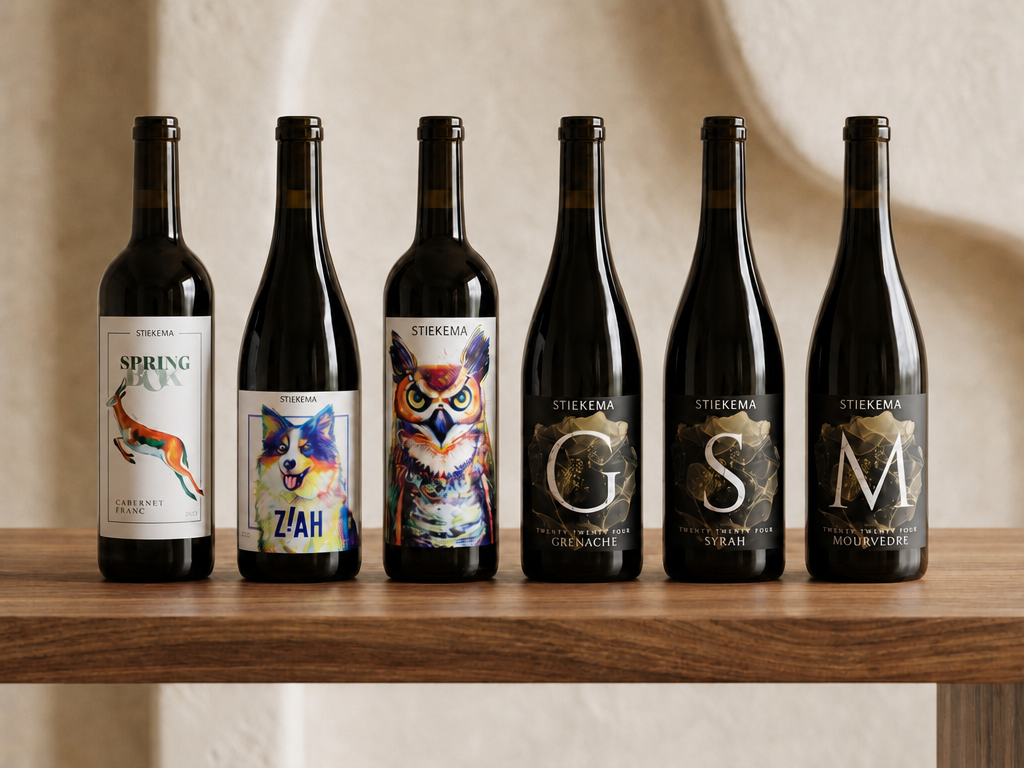
My focus is GSM and Rhône varieties, with a few detours I couldn’t resist:
- GSM: 45% Syrah, 30% Mourvèdre and 25% Grenache. It’s my flagship, and I wrote about why I build it on Syrah in our Syrah-led GSM post.
- Syrah: 100% Syrah from the Adelaida District.
- Mourvèdre: my favorite grape. If you want the backstory, read my post on Mourvèdre’s history in the New World.
- 2023 Grenache
- Rosé of Grenache from the Templeton Gap
- Orange of Vermentino, a skin-contact white
- Springbok: 100% Cabernet Franc
- ZIAH: 100% Petite Sirah
- The 2023 Reserve: my best wine, 8 cases
That’s a lot of different wines for 350 cases, and that’s part of the fun of being a garagiste. When the lots are this small, I can make a wine because I believe in it, not because it needs to fill a shelf somewhere.
Why small lots taste different
I won’t tell you small wine is automatically better wine. It isn’t. What small production does give you is attention. When I only have a handful of barrels of something, I can taste each one, follow how it changes, and choose exactly which barrels go into the bottle. My goal is always balance in mouthfeel, acidity and flavor, and at this scale I can chase it barrel by barrel.
It also means the wines reflect particular sites and particular years. A small lot from one vineyard tells you about that vineyard. If the vintage was different, the wine will be too, and I’d rather show that than smooth it away.
How to taste a garagiste wine
Because most small producers don’t have their own tasting room, finding their wines takes a little effort. I don’t have one either. Instead, I pour by appointment at Caelesta Wines, 2855 El Pomar Dr. in Templeton.
- The Stiekema Tasting is $25 per person, waived with a two-bottle purchase or a club sign-up.
- The barrel tasting is $80 per person, and you taste straight from the barrels that are still aging.
You can book on the Visit Us page, or call me at (509) 731-5267 if you don’t see a time that works.
The other way to get the wines is to join Club Stiekema. With lots this small, the club is the surest way to get the wines: members get priority access to every new release, there is no sign-up fee, and you can skip a shipment when you need to.
Frequently asked questions
What is a garagiste winery?
A garagiste winery is a very small, hands-on winery, usually run by the winemaker who owns it. The word comes from France, where it described small producers who made wine in modest spaces like garages. There is no official size limit.
How many cases does a garagiste winery make?
There’s no set number. Many make a few hundred to a few thousand cases a year. Stiekema Wine Co. makes about 350 cases a year, and some of my wines are only a few barrels.
Do garagiste winemakers really make wine in garages?
Some do, especially when they’re starting out. Many others work in shared or rented winery space. The name is more about size and spirit than about the building.
Can I visit Stiekema Wine Co.?
Yes, by appointment. I don’t have my own tasting room, so I pour at Caelesta Wines, 2855 El Pomar Dr., Templeton. The Stiekema Tasting is $25, waived with a two-bottle purchase or club sign-up, and the barrel tasting is $80.
How do I get small-lot wines that sell out?
Join the winery’s club or mailing list. For Stiekema Wine Co., Club Stiekema members get priority access to every new release.
Thank you for reading, and for supporting small wineries like mine. If you’re ever in Templeton, come taste with me.
Mike Stiekema