
Our Syrah-Led GSM: A Paso Robles Take on a Rhône Classic
People ask me all the time what makes our GSM different. The short answer: I build it on Syrah. The longer answer is the story of why I fell for this blend in the first place, and why I think Paso Robles is one of the best places in the world to make it.
What is a GSM?
GSM stands for Grenache, Syrah and Mourvèdre, three red grapes that have been blended together for generations in France’s southern Rhône Valley. Each one brings something the others lack. Grenache gives bright red fruit and warmth, Syrah gives color, dark fruit and structure, and Mourvèdre gives savory, earthy depth. Blended well, they make a wine that is more complete than any of the three alone.
In the classic southern Rhône style, Grenache usually leads the blend, often making up 50 to 80 percent of it. That’s the tradition I learned from, and it’s the tradition I chose to bend.
Why Paso Robles suits Rhône varieties
Paso Robles has become one of California’s best-known homes for Rhône grapes, and it’s easy to see why. These varieties like sunshine and a long growing season, and Paso has plenty of both. On the West Side, where all of my fruit comes from, the warm days are balanced by cooling ocean air. Breezes funnel in through the Templeton Gap, which helps the grapes hold on to their natural acidity, and the Willow Creek District is known for its calcareous, limestone-rich soils.
I source from the Adelaida District and the Templeton Gap, with Mourvèdre also coming from Willow Creek. For a winemaker chasing balance, that combination of ripeness and freshness is exactly what I’m looking for.
Why I lead with Syrah
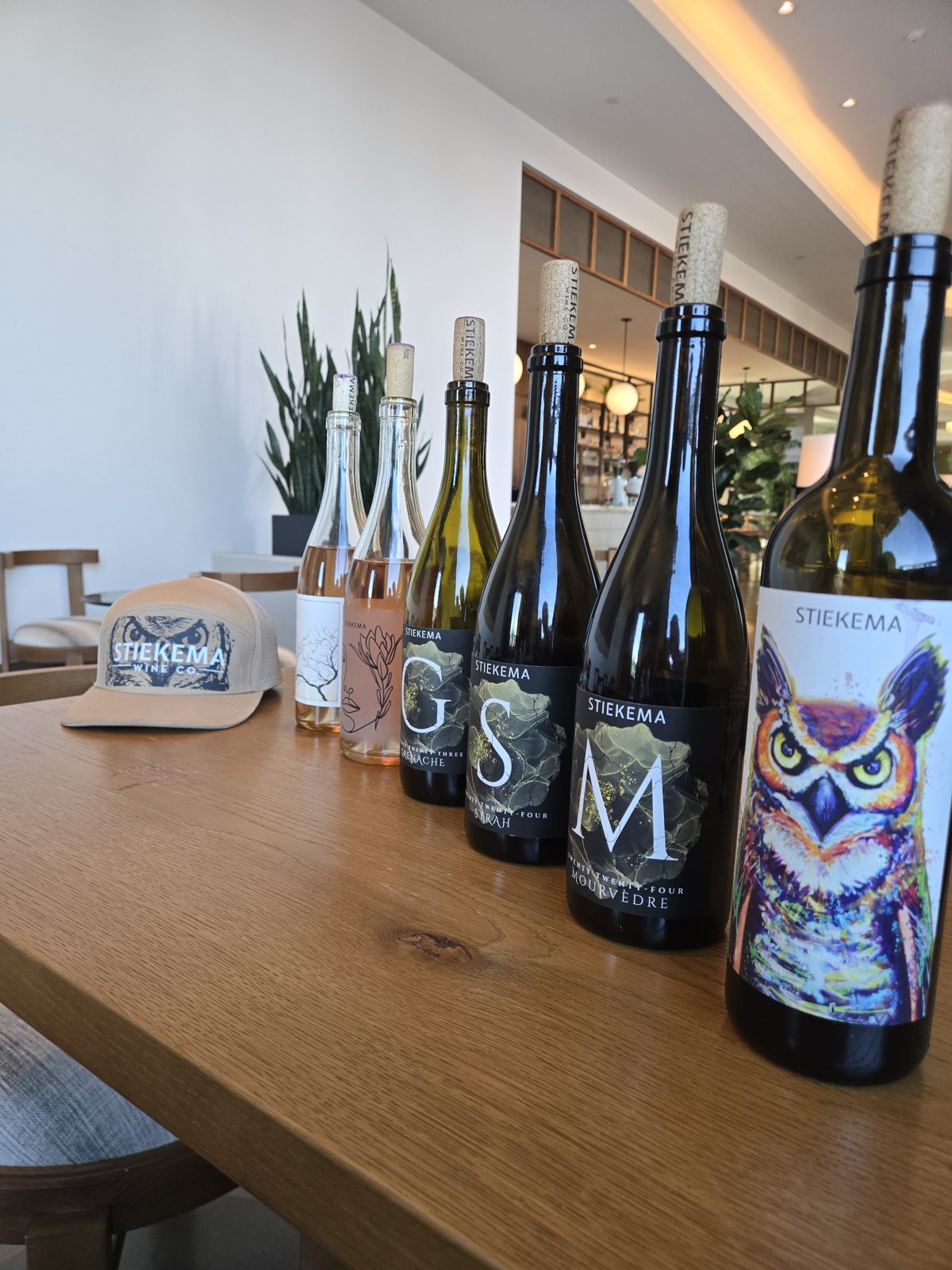
The GSM is my flagship, and it’s the first wine I build each vintage. Our 2024 Stiekema GSM is 45% Syrah, 30% Mourvèdre and 25% Grenache. Putting Syrah in front changes the personality of the wine. Instead of leaning toward red berry sweetness, it leans toward structure, dark fruit and spice.
Here’s how I think about each part:
- Syrah is the backbone. It brings blackberry, plum and blueberry, a firm frame of tannin and acidity, and the depth that lets the wine stand up to a big meal.
- Mourvèdre is the soul. At 30%, it adds savory notes like smoked meat, leather and black pepper, plus a chewy, earthy texture.
- Grenache is the seasoning. At 25%, it lifts the blend with violets and dried herbs and softens the middle of the palate with juicy, plush red fruit.
My goal with every wine is balance in mouthfeel, acidity and flavor. A Syrah-led GSM lets me get the power and darkness I love without losing the freshness that keeps you reaching for another glass.
Each grape on its own
One of the best ways to understand a blend is to taste its parts. I bottle a small amount of each variety on its own, so you can do exactly that.
- 2024 Syrah (Adelaida District, 35 cases): bold and full-bodied, with blackberry, black cherry and ripe plum, a hint of violet and dried herbs, and well-integrated tannins.
- 2024 Mourvèdre (Templeton Gap and Willow Creek, 57 cases): dark, concentrated fruit layered with cured meat, leather and cracked pepper, with a long, chewy finish.
- 2023 Grenache (Nakazawa Vineyard, Templeton Gap, 63 cases): medium-bodied, with cherry, raspberry and cranberry, floral notes of violet and lavender, and a touch of white pepper.
Taste them side by side and the GSM starts to make sense. You can pick out where the dark fruit, the savory edge and the lift each come from.
How the blend comes together
I ferment each grape separately, but always with the final blend in mind. Each lot is made to fit with the others, not just to stand on its own. The wines then rest in 100% French oak for 14 to 18 months; for the 2024 GSM, 30% of that oak was new. French oak gives a subtle touch that supports Rhône varieties without covering them up.
Blending is where it all comes together. I taste the components again and again until the Syrah’s structure, the Mourvèdre’s depth and the Grenache’s lift feel like one wine. It’s a small-lot, one-man operation, about 350 cases a year, so every one of those decisions is mine to make and mine to own. I’ve been making wine since 2012, from my first harvest through a vintage back home in South Africa and my Viticulture & Enology degree at Washington State University. GSM is still the wine I’m proudest of.
The 2024 GSM earned 94 points from Wine Enthusiast, and only 133 cases were made. After a barrel tasting with us, Stephen of The 6th Floor wrote: If you love Rhône-style wines, this is a must. Highest recommendation.
You can read more in our post about The 6th Floor’s review.
Frequently asked questions
What does GSM stand for?
GSM stands for Grenache, Syrah and Mourvèdre, the three red grapes behind the traditional blends of France’s southern Rhône Valley.
Is Stiekema GSM Syrah-dominant?
Yes. Our 2024 GSM is 45% Syrah, 30% Mourvèdre and 25% Grenache. Leading with Syrah gives the wine more structure, dark fruit and spice than a traditional Grenache-led blend.
How is a Syrah-led GSM different from a Grenache-led one?
A Grenache-led GSM usually leans toward red fruit, warmth and softness. A Syrah-led GSM leans toward dark fruit, firmer tannin and savory spice, with Grenache adding lift rather than leading.
How long can a Syrah-led GSM age?
It depends on the vintage and how the wine is stored. For our 2024 GSM, I suggest a drink window of 2027 to 2033. Store it on its side in a cool, dark place, and it should gain complexity over those years.
What should I pair with a Syrah-led GSM?
Think hearty and savory: grilled meats, braised short ribs, lamb, smoked dishes and aged cheeses. The dark fruit and pepper in the wine love a little char and spice.
Where can I taste Stiekema wines?
Tastings are by appointment in Templeton, including an $80 barrel tasting where you can taste the components from barrel. See our Visit Us page for details.
Planning a holiday table? See our Thanksgiving wine pairing guide for what to pour with turkey, ham and pie.
Taste the blend
The best way to understand a Syrah-led GSM is to open a bottle. You can order the 2024 Stiekema GSM online, or join our wine club for priority access to each new release, GSM included. Thank you for being part of this small South African story, grown in Paso Robles.
Mike Stiekema

Pingback: Mourvèdre History, New World & Paso | Stiekema Wine Co.
Pingback: Thanksgiving Wine Pairing Guide | Stiekema Wine Co.