Mourvèdre: The Grape That Has My Heart
If you’ve ever shared a glass with me, you already know where this is going. Grenache gets the charm and Syrah gets the headlines, but Mourvèdre has my heart. So let me tell you where it comes from, how it found a second life in the New World, and why I think it’s the best variety ever. Fair warning: that last part is pure opinion.
Where Mourvèdre comes from
Mourvèdre most likely began on Spain’s Mediterranean coast, where it’s still called Monastrell and grows across Murcia, Valencia and Jumilla. The French name probably comes from the old town of Murviedro (Morvedre), known today as Sagunto, just north of Valencia. Its other old name, Mataró, comes from a town near Barcelona.
From Spain, the grape is generally thought to have crossed into southern France around the late Middle Ages and became a leading red grape of Provence. In 1884, Charles Wetmore, California’s chief viticultural officer at the time, wrote that “all the great French authorities agree in placing the Mataro as the finest red wine grape of the southern regions.” I couldn’t agree more.
Phylloxera, Bandol and Châteauneuf-du-Pape
Then came phylloxera, the root louse that devastated European vineyards in the late 19th century. The cure was grafting onto American rootstocks, and Mourvèdre didn’t take well to the rootstocks of the day. Most growers replanted easier grapes like Grenache, and Mourvèdre nearly vanished from France.
It held on in Bandol, on the Provençal coast, where sandy soils helped keep phylloxera at bay. Bandol is still Mourvèdre’s spiritual home. Under the appellation’s rules, red Bandol must be at least 50% Mourvèdre, and the wines spend around 18 months in wood. They’re powerful, tannic and built to last, and Bandol rosé, with at least 20% Mourvèdre, is one of the great rosés of the world.
After World War II, better rootstocks finally made Mourvèdre practical again. Jacques Perrin of Château de Beaucastel, working with cuttings that traced back to Bandol, led its revival in Châteauneuf-du-Pape and made it a key grape in Beaucastel’s reds.
Mourvèdre in the New World
Australia’s ancient Mataro
In Australia the grape went by Mataro and settled into the Barossa Valley. Phylloxera never reached South Australia, so some astonishing old vines survived. The Old Garden vineyard at Rowland Flat, planted in 1853 and still tended by descendants of the family that planted it, is believed to be the oldest Mourvèdre vineyard in the world. Once lost in blends, old-vine Barossa Mataro is now bottled on its own and treasured.
California: from Mataro to Mourvèdre
Mataro reached California in the second half of the 1800s and was usually planted into field blends alongside Zinfandel and Carignane. When phylloxera hit, the sandy soils of Contra Costa County protected some own-rooted vines, and the oldest surviving Mourvèdre vineyards in California are there. In 1982, Fred Cline started making wine in Oakley from those old, dry-farmed vines. Pioneers like Cline and Randall Grahm of Bonny Doon championed Rhône grapes, and an informal 1980s group of vintners grew into the Rhône Rangers, formally founded in 1998.
Paso Robles today
Paso Robles became a big part of that story. In 1989, the Perrin family of Beaucastel and the Haas family founded Tablas Creek in Paso’s Adelaida District and imported vine cuttings from France, Mourvèdre among them. They later donated Mourvèdre selections to UC Davis so other growers could plant them, and today Mourvèdre is the biggest planting in their vineyard. Paso’s west side, with its hot days, cool nights and long season, suits this late ripener beautifully. Still, California has only about a thousand acres of Mourvèdre, a fraction of one percent of the state’s vineyards.
A South African footnote
Given our story, I have to mention South Africa, where Mourvèdre is a fairly recent arrival. Professor Abraham Perold recommended it as early as the 1920s for its quality and its tolerance of heat, but it only seems to have been planted there in the late 1980s. By 2016 there were roughly 470 hectares, with the Swartland and Paarl growing more than half of it. I love watching it find its feet in the Cape, just as it has here.
Why I think Mourvèdre is the best variety ever
- It’s savory. Ripe Mourvèdre has dark fruit, but it also brings cured meat, leather, black pepper, earth and herbs.
- It has structure. Mourvèdre brings tannin and backbone to a wine. Wetmore praised the “keeping qualities” it lends to a blend.
- It ages. Wetmore compared it to Cabernet Sauvignon: “it requires age to develop its quality.” Mourvèdre-based wines can go quiet for a while in middle age, then open up again with notes of forest floor, leather and truffle.
- It makes you earn it. Mourvèdre buds late, flowers late and ripens late, often weeks after Grenache. It needs heat and a long season, and the vines are low in vigor with small crops. When it ripens fully, it’s worth the wait.
- It’s the soul of the GSM. In our blend, Syrah is the backbone and Grenache is the seasoning, but Mourvèdre is the soul. It brings the chewy texture and earthy depth.
Is it objectively the best grape in the world? I’ll let you decide after a glass. For me, it’s not even close.
Our 2024 Mourvèdre
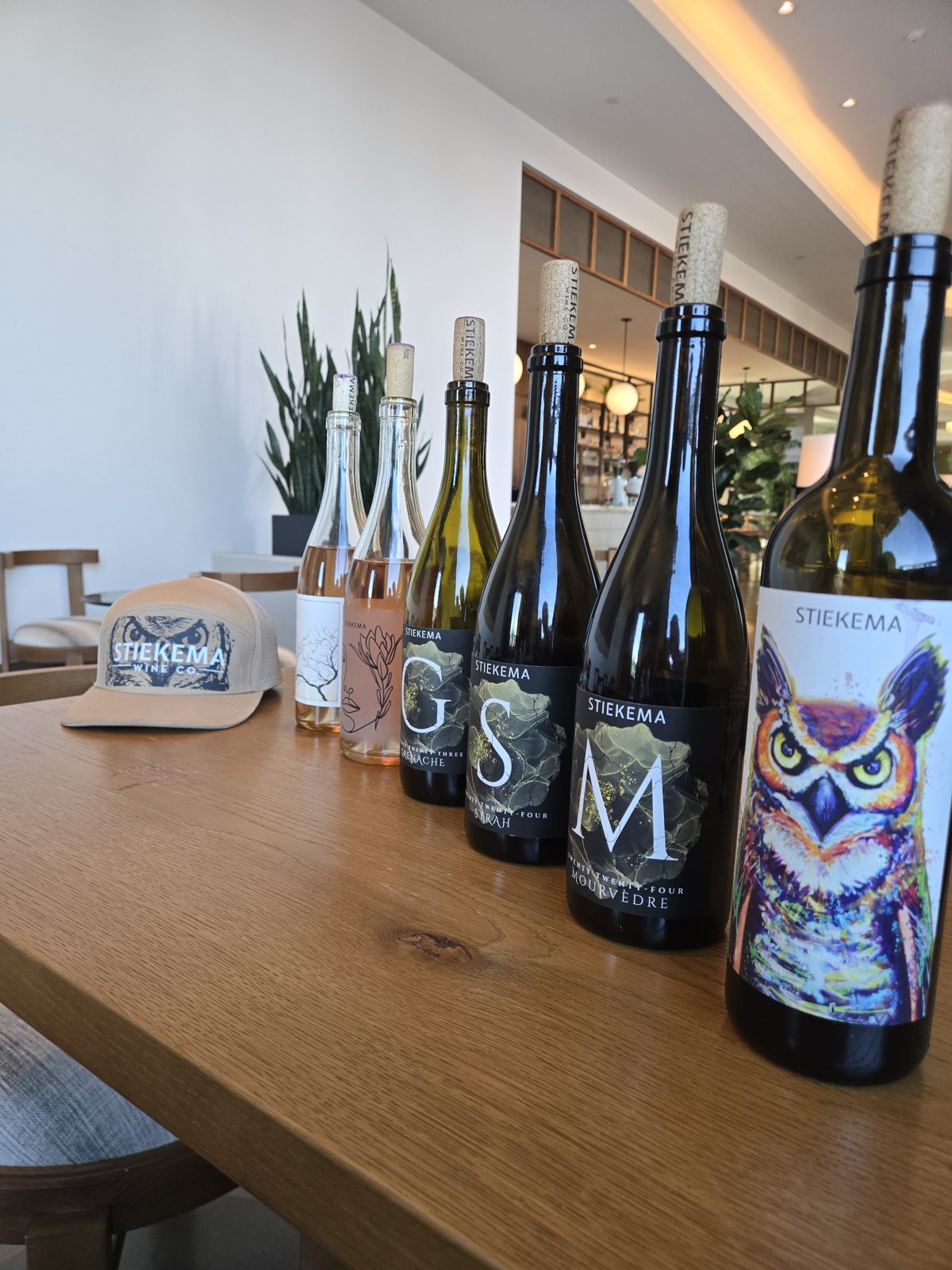
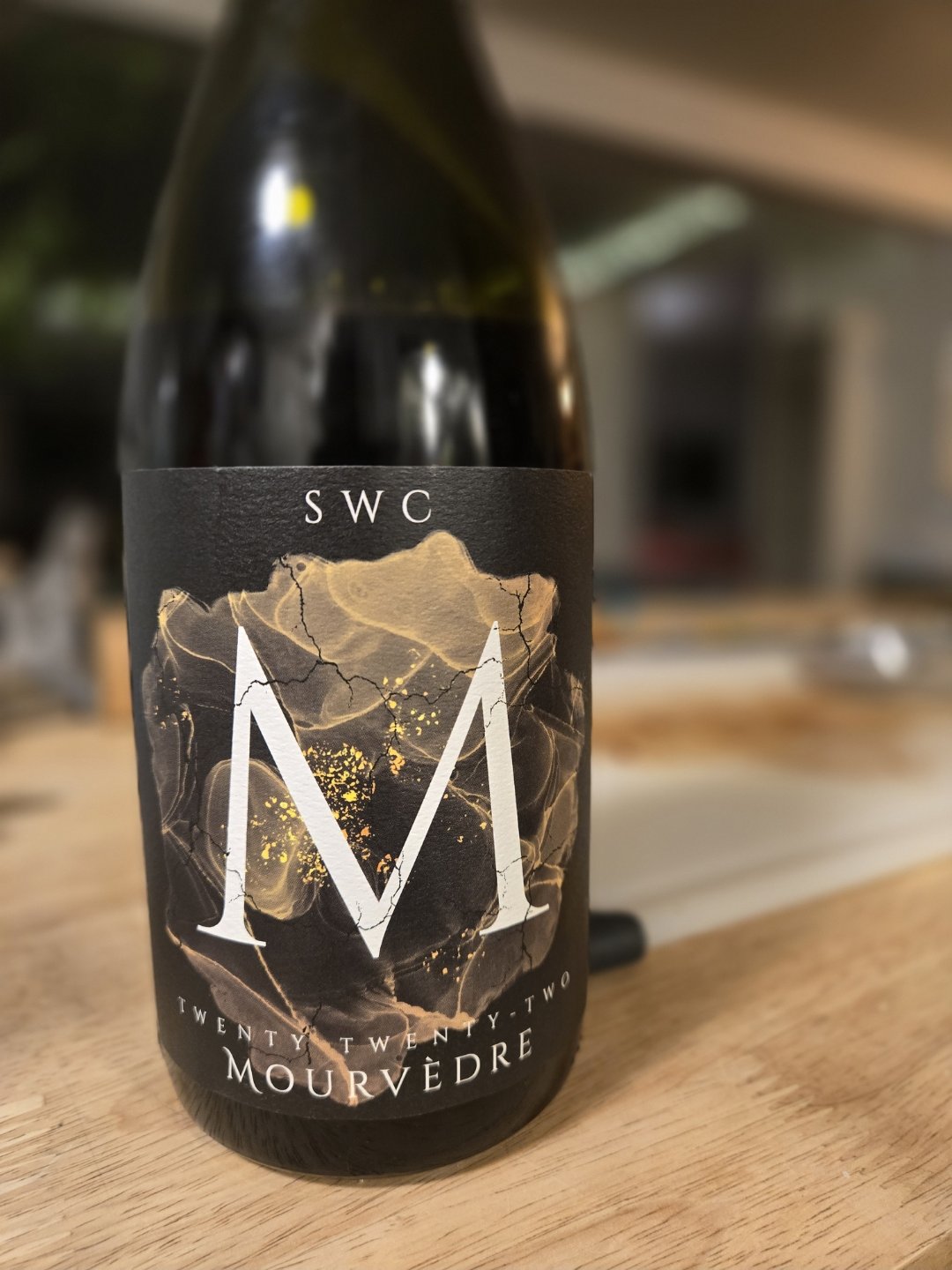
Our 2024 Mourvèdre is 100% Mourvèdre, split evenly between Block 13 at Caelesta Vineyard and Killer Canyon at ONX Vineyards. The fruit comes from two west side districts of Paso Robles. In the Templeton Gap, cool “Fog Monster” breezes help the grapes hold on to their natural acidity. Willow Creek gives us its calcareous, limestone-rich soils.
In the glass, think blackberry compote, black cherry pie and roasted fig, layered with cured meat, leather, cracked black pepper, sage and dried lavender. The palate is rich and almost syrupy, with dark chocolate, espresso and black licorice, then long, velvety tannins and a mineral finish that keeps it fresh. We made just 57 cases, and it’s rated 94 points by Wine Enthusiast.
Want to taste what Mourvèdre does in a blend? Our 2024 Stiekema GSM is 30% Mourvèdre, and you can read why I build it on Syrah in my post on our Syrah-led GSM.
Mourvèdre FAQ
Are Mourvèdre, Monastrell and Mataro the same grape?
Yes. It’s one grape with three names: Monastrell in Spain, Mourvèdre in France, and Mataro, a name still heard in Australia and in California’s old vineyards.
Does Mourvèdre age well?
Yes. Many Mourvèdre-based wines go through a quiet, closed phase a few years after bottling, then reopen with more earthy, complex flavors. If you open one young, give it some air.
What food goes with Mourvèdre?
Its savory side loves rich, hearty food: lamb, braised short ribs, grilled meats and aged cheeses are all great matches.
Planning a holiday table? See our Thanksgiving wine pairing guide for what to pour with turkey, ham and pie.
Taste it for yourself
With only 57 cases, our 2024 Mourvèdre won’t be around long. Grab a bottle, or join the Stiekema Wine Club for priority access to every new release. I’d love to hear what you think.
Cheers,
Mike